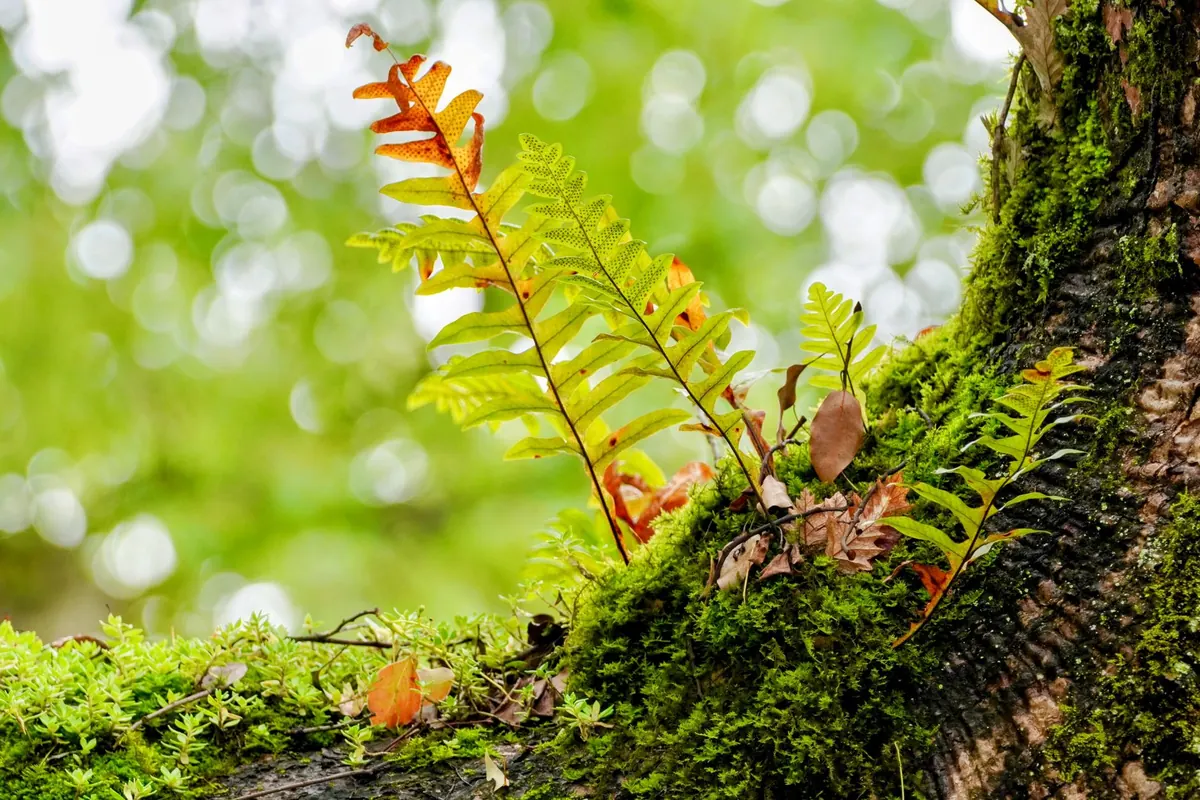
Ask a gardener in Argyll what grows best in their patch and you may get a wry answer: moss. Scotland's climate — cool summers, mild winters, rain that arrives in sheets and then lingers as drizzle for days — suits bryophytes far better than it suits most border perennials. Once you stop treating that as a problem, the question changes from "how do I kill it?" to "which one should I plant?"
The answer depends on your ground. A dripping stone flight in Glasgow, a boggy corner in Perthshire and a wind-scoured slope in Sutherland are three different habitats, and the mosses that relish one will sulk in another.
Why Scottish conditions suit moss
Mosses have no roots and no waxy cuticle, so they take in water and nutrients straight through their leaves. That makes them vulnerable to drying out — and it makes a damp, humid climate close to ideal. Cloud cover keeps evaporation low, and humid air means a moss can stay hydrated long after the rain has stopped.
Scottish soils help too. Much of the country is acidic: peat, peaty podzols, thin hill soils over rock. Mosses generally prefer that to rich, heavily fed ground, where grass and weeds simply outgrow them.
The east is a different story. Fife, East Lothian and parts of Angus sit in a rain shadow, with drier, brighter, windier conditions. Gardens there need the tougher species — the ones that tolerate a fortnight of dry weather without turning to crisps. And everywhere, wet alone is not enough: moss also needs somewhere to sit that isn't smothered by thick leaf litter or shaded into permanent darkness by dense conifer canopy.
Dependable all-rounders for most gardens
If you are starting out, these four will grow almost anywhere in Scotland and forgive a fair amount of neglect.
- Springy turf moss (Rhytidiadelphus squarrosus) — the star-shaped, yellow-green moss that colonises patchy lawns. It stays green through winter when grass goes brown, and spreads readily from fragments. Many gardeners fight it; in a damp, shaded lawn it is often the better carpet.
- Cypress-leaved plait moss (Hypnum cupressiforme) — endlessly adaptable. Walls, roof tiles, tree bases, stone steps, dry-stone dykes. If you have a surface in Scotland that stays damp for part of the day, this moss will probably find it by itself.
- Purple fork moss (Ceratodon purpureus) — bright green cushions that turn rusty red as they mature. It loves gravel, path edges, burnt ground and cracks in paving. Short-lived, but it seeds and fragments so freely that it rarely disappears.
- Silver thread moss (Bryum argenteum) — the small, silvery-grey tufts in paving joints. It shrugs off foot traffic better than most, which makes it useful between flagstones and on step edges.
Mosses for bogs, flushes and wet lawns
Where ground stays genuinely wet, you can grow things that would rot most plants.
Sphagnum
The bog mosses — Sphagnum palustre, S. squarrosum, S. fimbriatum, S. capillifolium — are the specialists. They hold a great deal of water relative to their weight, acidify their surroundings as they grow, and slowly build peat. In a garden they are superb in bog plantings, around the margins of a wildlife pond, in rain-fed containers, and tucked among blueberries and other acid-lovers.
One firm rule: buy nursery-propagated Sphagnum or grow your own from fragments. Do not lift it from a bog, and never from a protected site. Lowland raised bogs are scarce, slow to recover and legally protected in many cases.
Other wet-ground options
- Pointed spear moss (Calliergonella cuspidata) — neat, upright, surprisingly tolerant of compaction and occasional flooding. Excellent along pond edges and in wet lawns.
- Tree moss (Climacium dendroides) — looks like tiny conifer seedlings and grows where water seeps through the ground. Perfect for a flush or a damp hollow.
- Water moss (Fontinalis antipyretica) — for the edges of ponds and slow-moving water, and for the splash zone of a water feature.
Woodland and shade specialists
Shade in Scotland rarely means dry. Banks under birch, oak and rowan, north-facing walls and the strip behind a garage all hold moisture well.
Common tamarisk moss (Thuidium tamariscinum) is the pick of the bunch: finely divided, fern-like, and quicker to spread than most. It tolerates neutral to slightly acidic soil and knits together beautifully on shaded banks. Glittering wood moss (Hylocomium splendens) forms those distinctive stepped layers on woodland floors and wants cool, humid, undisturbed shade — hard to establish from scratch, but worth encouraging if it already appears. Hart's-tongue thyme moss (Plagiomnium undulatum) has broad, wavy, translucent leaves and loves the damp strip beside a downpipe or under a dripping tap. Pincushion moss (Leucobryum glaucum) makes pale, rounded hummocks on acidic woodland soil; it is slow, so buy or transplant small patches and leave them alone.
West coast and upland choices
Where rainfall is highest and the air rarely dries, you can grow the dramatic stuff. Woolly fringe moss (Racomitrium lanuginosum) clothes rock and gravel in the west and on higher ground, grey-green and hoary, and it genuinely prefers cloud and spray to shelter. Common haircap (Polytrichum commune) sends up tall, stiff stems on wet acidic ground and looks superb massed on a bank. Red-stemmed feather moss (Pleurozium schreberi) and ostrich plume moss (Ptilium crista-castrensis) are the classic companions for heather and blaeberry.
One caution: Campylopus introflexus, a southern-hemisphere moss, has spread widely onto Scottish heathland and disturbed acidic ground. It is invasive here. Don't move it about, and don't include it in a planting scheme.
Matching moss to the spot, and keeping it going
Moss establishment is less about planting and more about preparation. Clear the competition, get the surface right, then be patient.
- Choose species that match your light, wetness and soil acidity. A bog moss on a dry wall is a wasted purchase.
- Clear grass, weeds and heavy leaf litter from the area, but don't dig it over. Moss wants a firm, settled surface to sit on.
- Press fragments or plugs firmly onto the surface — soil, stone or bark. Contact matters more than depth.
- Water with rainwater where you can. Tap water in hard-water areas leaves deposits that many mosses dislike.
- Keep the patch damp for the first couple of months, especially through any dry spell in late spring.
- Skip the fertiliser and keep weedkiller well away. Fertility favours grass and weeds, not moss.
- Expect it to look unpromising for a season. Most mosses settle in the second year and spread properly in the third.
Sourcing matters. Ask permission before taking moss from anyone's land, avoid protected sites such as SSSIs and nature reserves entirely, and buy Sphagnum from a nursery that propagates it. The easiest material of all is often under your own feet: lift small fragments from a healthy patch elsewhere in the garden and spread them where you want them.
Start with one damp corner
Don't try to convert the whole garden. Pick the shadiest, dampest, least productive corner — under a north wall, beside a downpipe, along a shaded path edge — and give it three or four species suited to those exact conditions. Keep it clear of grass, water it with rainwater through any dry weeks, and leave it alone.
If it works, that corner will show you what your ground naturally wants to do, and you can widen the scheme from there. In a Scottish garden, the moss is usually only too willing to help.
Photo: F1lter 88 / Pexels